Chủ Nhật, 30 tháng 8, 2015

Quang Tri veteran brings home the bacon


Pigging out: Tran Dang Truyen checks on his pigsty.

Tran Dang Truyen, a veteran in Quang Tri Province, built a small fortune from scratch after those around him called him crazy for leasing a large swath of abandoned land to raise pigs and fish. Thanh Thuy reports.


Tran Dang Truyen, 76, became famous partly because he stubbornly accepted a dare to build a hut and work in an overgrown field.


He was born into a poor household and had many brothers. In January 1965, he joined a militia force operating under orders from Quang Tri Province’s irrigation office to protect the La Nga dam in Vinh Linh during the American War.


From October 1968 to October 1971, he was part of the youth volunteer force of the Youth Union of Vinh Linh, fighting for and repairing the dam that bore water to the farmers.


After southern Viet Nam was liberated, he worked at the Ben Hai irrigation management station, now known as Vinh Linh Irrigation Company.


He retired in 1989 with five young children to support and very little money.


Determined to escape poverty, he invested in fish farming, rice growing, egg incubation and pig farming in 2002.


Truyen recalled being called crazy when he leased 7ha of land to develop his fields, fish pond and pig sty.


Today, looking at his green farm with its large fish ponds, few people realise this barren land was once abandoned, leaving it overgrown with tall weeds and filled with bomb craters.


Truyen was undaunted by the challenges as he believed in the adage, “With enough manpower, stones become rice”.


Every day, from early in the morning until late at night, he worked in the field, building embankments, creating irrigation channels and clearing out weeds.


“My wife and I worked hard all day long, yet we still failed. We invested money borrowed from relatives to raise 800 ducks, hoping to improve our family’s situation. Unfortunately, most of the ducks contracted a disease and died, so we were left with only 13 ducks.


“All our hopes and efforts seemed to be suppressed. My wife and I lost sleep for a month when the ducks died and our money was lost.


“Refusing to give in to our fate and believing in the saying, ‘We have lost one match, so we will try another’, my wife and I sold all our furniture to get the funds to raise 10 pigs and to expand our fish farming area.


“God does not betray his people, so we gradually rebuilt our finances and earned enough money to repay our creditors and expand production.”


Reeling it in: Truyen is famous for fish farming.Visitors to Vinh Thuy Commune of Vinh Linh District in the central province of Quang Tri need only enquire about “Truyen fish” here to be directed to the large house by the main road.

Today, despite his age, Truyen is still working at the farm every day.


Chairman of Vinh Thuy Commune Phan Ngoc Nghia confirmed that Truyen’s family was once very poor.


“He was not resigned to his fate; instead, he led the way to reclaim overgrown land and built a farm with rice fields, fish ponds and a pig sty.


“After many false starts, today, his farm is one of the most successful in our commune and employs many of the locals. The farm can be used as a strong, efficient and economic model for other families,” Nghia said.


In addition, as part of efforts to develop the countryside in his district, Truyen also provides young livestock and technical guidance to other farmers.


Due to his tireless efforts, Truyen’s 7ha farm produces 18 tonnes of rice per year, and he earns some VND35 million from selling fish. His family provides more than 30,000 fry to the market each year.


He also raises more than 300 chickens, 40 pigs and more than 1,500 ducks.


Truyen has bought a rice harvester, two freight vans, water pumps and rice threshers.


Every year, his farm earns a net profit of more than VND200 million. So far, Truyen does not seem to want to retire.


He said he would guide and support his descendants, advising them to continue expanding their investment plans to cultivate new kinds of crops and livestock and to continue purchasing more farming machinery.


Chairman of Vinh Linh District’s Veteran Association Tran Minh Hien said, “Truyen has been a role model for many years, leading the association’s members towards economic development.


“His garden, fish pond, pig sty farm has encouraged other members to actively learn his methods and to adopt his creative spirit.


“We see how relentless he is when he works, even though he is old. He remains a good example for the younger generations to follow,” he said. — VNS


Quang Tri veteran brings home the bacon

#vietnamtravelnews #vntravelnews #vietnamnews #traveltovietnam #vietnamtravel #vietnamtour
Vietnam Travel News - Explore what"s happening around Vietnam.
www.vntravelnews.com
www.facebook.com/vntravelnews
www.twitter.com/vnntravelnews
www.pinterest.com/vntravelnews/
https://plus.google.com/+Vntravelnewscentre/

An arduous but rewarding journey north


Green with envy: Cao Bang Province is famous for its natural beauty, with both mountains and jungles. — VNA/VNS Photos Phuong Hoa

A group of travellers makes its way up to Cao Bang to see one of the country’s legendary waterfalls, admiring the scenery along the way. Le Thu Huong reports.


We left Ha Noi after lunch on a steamy hot summer day. Everyone in our group was excited because we had read about Cao Bang and its spectacular Ban Gioc Waterfalls near the border with China. From our school textbooks, we had all learned that the waterfall is one of Viet Nam’s most magnificent, and we needed to get there at least once in our lifetimes.


Everyone was so excited, we never thought about the challenges that awaited us on the road. The road from Ha Noi to Cao Bang is about 300km crossing Thai Nguyen and Bac Kan provinces. The road from Ha Noi to Thai Nguyen is in great condition and we passed 80km in no time. From Thai Nguyen to Bac Kan, the road turned worse, and we couldn’t go as fast.


However, the slow speed gave us more chances to admire the beautiful mountain landscape. Small villages nestled at the foot of a hill, little towns scattered behind mountain slopes. At times, we had to stop and wait for a large buffalo herd to walk across the road.


Multiple levels: More and more people are visiting the Ban Gioc Waterfalls.

Cao Bang is not only known for its big waterfalls, it also boasts an important revolutionary pilgrim destination. Pac Bo Cave was home to President Ho Chi Minh, who lived and worked there for a year after he returned home from abroad to organise and lead Viet Nam’s revolutionary movement during the early 1940s. While living at the cave, he named a nearby spring after former Soviet Union President Vladimir Lenin, and a mountain after German philosopher Karl Marx. Uncle Ho also held revolutionary training classes with a syllabus based on documents translated by him and ran an underground newspaper.


On both sides of the road, we saw colourful billboards hanging in front of houses advertising foods and rest houses, along with locals selling specialties such as pickled bamboo shoots, mac mat fruit (an essential ingredient for meat or fish dishes) and many others.


Our 16-seat coach continued running on a smooth section of road through mountain hamlets surrounded by immense pine forests.


The road from Bac Kan to Cao Bang is more zigzag with sections running close to the mountain side, and we saw fields lying between trees in the valley.


On the mountain slope are immense fields of maize which began turning yellow, signalling a bumper crop.


Our car continued running up and down passes on the 120km road. The higher we go, the turns have become even sharper. We pass the most challenging passes any long-distance coach driver would be proud to have crossed: Giang, Gio, Khau Khoang, Cao Bac and Tai Ho Sin.


On the edge: A group of tourists pose with a national border marker.

The longest and most winding pass is Gio Pass. Sometimes, our hearts sank into the pit of our stomach when we saw big trucks loaded with heavy goods coming in the opposite direction on dangerous turns.


It seems the more our hearts were tested, the higher our souls were lifted: the landscape was getting much more imposing and breathtaking. On one side, the small valleys with green rice fields and bamboo trees reflected in the clear stream. On the other side is a dark mountain wall, covered with stones. By late afternoon, the sun began to go down the mountains, and looking up we saw a dark purple sky rest on high mountain peaks.


Finally, after 6 hours, we arrived in Cao Bang city at 7pm.


Our first impression is that it is a nice and small city, not too busy.


We came to a restaurant in the city centre where we could try a local feast full of specialties such as bo khai (a kind of vegetable in the forest), ong khoai (young bees) stir-fried with sour bamboo shoots. But the most impressive of all was the glutinous rice steamed with ants’ eggs. I was hesitant at first when I saw dead ants among the brownish rice grains. But it did taste very good with a splash of crispy ants’ eggs.


We spent the night at a local hotel and the next morning, we had breakfast out again at a local stand. Then we went to a very charming and spacious cafe at the end of a tiny little alley. The morning was tranquil and quiet, we could have stayed there all morning. But it was time to go and we were all ready to get moving.


After half an hour on the coach, the tour guide led us to Ban Gioc Waterfalls, which is listed as one of the world’s greatest waterfalls to straddle two nations by Touropia in 2015 along with Iguazu Falls between Brazil and Argentina, the Victoria Falls between Zambia and Zimbabwe and Niagra Falls between Canada and the US.


First in its field: The Phat tich Truc lam Ban Gioc Pagoda was the first pagoda built in the northern border region. It is in Dam Thuy, Cao Bang Province, close to the Ban Gioc Waterfall. — Photo vietnamnet.vn

Touropia also listed Ban Gioc Waterfalls as one of the 10 most spectacular waterfalls in the world.


From Cao Bang city centre, there are two ways for you to choose to reach Ban Gioc. One is Tra Linh to Tong Cot and the other is Ma Phuc to Quang Uyen.


The Ma Phuc Pass is famous in the north for its lime stone mountains, which have two stone blocks that look like two horses kneeling down.


The pass is not as high and doesn’t zigzag as much as Gio Pass so we all felt comfortable and enjoyed the wild landscape along the two sides of the road.


From Trung Khanh District centre to Dam Thuy Village where the waterfall is located, we drove along the Quay Son River. As we approached the waterfall, we heard its roaring sound.


When we arrived near the waterfall, we had to park our car and walk on a zigzag road to reach the site.


Rushing rapids: Ban Gioc Waterfall in Trung Khanh District (Cao Bang Province) is the biggest natural waterfall in Southeast Asia, and it attracts about 30,000 visitors a year. — VNA/VNS Photo Thanh Ha

The tour guide told us that the mild Quay Son River winded through hamlets and forests before meeting a sudden drop-off, creating a fast and thick fall from a height of more than 10 metres through dazzling white spumes.


A secondary waterfall is located in Dam Thuy Village of Cao Bang Province’s Trung Khanh District. It’s 53 metres high and 300 metres wide. It has three layers creating many different small and large waterfalls.


We toured the site on a bamboo raft. The river section under the waterfall is large enough for us to stand on the raft and enjoy the natural beauty of the waterfalls. Its sound and strong current from immense forests and mountains created a beautiful sight that infatuates any guest who makes the trip here.


We were so absorbed enjoying the waterfalls we forgot about returning to the city despite it being already late in the afternoon.


In Cao Bang, apart from Ban Gioc, Pac Bo, you can visit the Tran Hung Dao historical forest where Viet Nam’s first army platoon was formed in 1944 and Nguom Ngao, a beautiful cave which was discovered in 1921 and opened for travellers in 1996.


Our short trip could not include these visits, but we can come back another time, when hectic life in the city sends us right back to the beauty of Cao Bang. — VNS


An arduous but rewarding journey north

#vietnamtravelnews #vntravelnews #vietnamnews #traveltovietnam #vietnamtravel #vietnamtour
Vietnam Travel News - Explore what"s happening around Vietnam.
www.vntravelnews.com
www.facebook.com/vntravelnews
www.twitter.com/vnntravelnews
www.pinterest.com/vntravelnews/
https://plus.google.com/+Vntravelnewscentre/

What being a pedestrian means in Viet Nam


“Walk! Walk! You can walk! It’s easy.” You probably associate these words with your earliest memories of taking your first steps. However, these words were spoken in a very different context recently.


Rather than words of encouragement, they became a tool for intimidation when a Western man shouted at a Vietnamese girl riding her bike on a street in the Old Quarter, where motorbikes are banned from travelling between 7pm and 11pm on weekends.


The girl told another Vietnamese person that she had completely understood what the foreigner had said to her but explained, “I just didn’t like it.”


The pedestrian had continued to block her path until she eventually agreed to get off her bike and walk.


A video recording of the incident went viral overnight.


Most of the Vietnamese people posting on social networks completely supported the actions of the Western man since it was the girl who had invaded the pedestrian area, an action that is regarded as a bad habit.


One of my friends, an American teacher, later commented on Vietnamese etiquette in using the pavements: “Where does he think he lives? He is in Viet Nam.”


This reminded me of the famous proverb, “When in Rome, do as the Romans do.” Based on that concept, how would we define Vietnamese pavement etiquette?


“How do you cross the road in Ha Noi? Look left, look right, and you’ll get hit by the guy riding on the pavement,” Dominic Luxton, a visitor from London, said.


In crowded cities, instead of being stuck in traffic jams or squeezed on a bus, walking appears to be the choice offering the most freedom. In Viet Nam, however, walking isn’t free of challenges.


“In Ha Noi, you can’t walk on the pavement because of all the motorbikes parked on it, and I swear, in two days, I was nearly hit about 20 times,” Samuel Crowley, an Englishman, said, recalling his visit to Ha Noi two years ago.


To most people, the “Vietnamese manner” likely conjures up images of parked motorbikes and streets jammed with vehicular traffic.


Mike Eveleigh, a traveller from America, said, “I realise that the pavement is purely for parking motorbikes, and the road is for walking, driving and cycling in whatever direction you fancy.”


Indeed, the pedestrians can walk freely in any way they choose.


However, it is not just the motorbikes cluttering the pavements but also mobile street vendors selling fruit and vegetables and private shops that have expanded onto the pavements. In other words, public areas appear to be understood as public resources that anyone can make use of.


Ann Clarke, an expat working in Ha Noi for five years, said, “What a contrast: Ha Noi, where I can spit on the pavement, and Singapore, where I can lick it.”


In fact, the development of the pavement economy in Ha Noi is closely related to the economic liberalisation process introduced by the Doi Moi (renewal) policy. As the number of job opportunities in the state’s public sector dropped, a large number of former state employees decided to get involved in the pavement economy as a means of supplementing their income.


Images of street vendors elicit feelings of nostalgia for years past in Ha Noi. Architect Ton Dai, chairman of the Ha Noi Elder Architects Association, stressed that trading on pavements in the Old Quarter maintains a link between the past and the present.


“We need to keep the spirit of old streets alive as it is a unique feature of Vietnamese urban culture.”


That brings us to the question of what residents want their city to look like.


Last month, the “Walking Visionaries Awards” for 2015-2020 was held in Hoi An by Walk21 Vienna for the Planning and Design for Liveable Public Spaces initiative, and the submitted project for Hoi An was highly praised.


Nguyen Van Son, vice president of Hoi An People’s Committee, noted that the development of liveable public spaces was an urgent issue in urban areas. The global trend of urban development is to reconstruct the city in a manner that is healthy for its residents and provides room for walking and cycling.


Before its pedestrian zones came into effect in 2004, it took Hoi An four years to get the nod from both visitors and locals.


Last year, Quang Nam Province received nearly 3.7 million visits to Hoi An, and tourism authorities there have announced that Hoi An’s pedestrian zone will be expanded and the hours of operation will be extended.


On August 11, the HCM City People’s Committee requested Nguyen Hue Pedestrian Street’s management team to ban pets from the pavements. The ban also included selling coffee, skating and sitting on picnic blankets on the sides of the street. In addition, HCM City installed hundreds of security cameras on Nguyen Hue Pedestrian Street to identify and penalise those who drive through walking zones.


Although Viet Nam recently granted visa-free travel to visitors from five European countries to revive its tourism industry, further steps are needed to boost the quality, not merely the appearance, of the streets.


For now, it is likely that clashes between foreigners and locals will continue to take place. And some people may even need to learn how to walk. — VNS


What being a pedestrian means in Viet Nam

#vietnamtravelnews #vntravelnews #vietnamnews #traveltovietnam #vietnamtravel #vietnamtour
Vietnam Travel News - Explore what"s happening around Vietnam.
www.vntravelnews.com
www.facebook.com/vntravelnews
www.twitter.com/vnntravelnews
www.pinterest.com/vntravelnews/
https://plus.google.com/+Vntravelnewscentre/

Thứ Bảy, 29 tháng 8, 2015

Tycoon to the rescue as cheaspaner China floods Vietnam's economy


Soldier-turned-tycoon Nguyen Huu Duong is a fierce patriot still fighting to protect his country, four decades after battling American forces in the war in Vietnam.


The construction mogul has amassed a war chest of tens of millions of dollars to fight for greater independence for Vietnam"s economy and counter an invasion of a different kind: Chinese goods.


Rapid growth in Vietnam is masking a chronically ill small-business sector that the rags-to-riches entrepreneur says is suffocated by a multi-billion dollar influx of cheap, mass-produced goods from China, under-cutting domestically produced items.


Duong has a rescue plan he says isn"t a swipe at China, but a nurturing of startups, enticing them with free 50-year leases in his Hanoi mall "V+" – if they sell only Vietnamese-made products.


He is lobbying the government to introduce the model nationwide to stem the closures of tens of thousands of businesses each year and encourage customers to go local.


"China exports to the world at very, very low prices and that"s put huge pressure on the Vietnamese economy and production," Duong told Reuters.


"I"m a businessman, I understand why firms can"t develop. Without this kind of thing, Vietnamese businesses will perish."


Vietnam"s dependence on its giant neighbour and biggest trade partner is resented by a population embittered by a history of perceived bullying and territorial incursions.


Relations soured in 2014 when Beijing started oil drilling in disputed waters, triggering the kind of nationalist rage that puts Vietnam"s rulers in a tricky spot. A strong rebuke might satisfy the public and party progressives, but could anger a neighbour capable of holding its economy hostage.


Three-quarters of their annual $60 billion trade is made up of Vietnamese imports from China and many experts consider that understated. That flow barely registers in China, worth just 0.65 percent of its $2.3 trillion in exports in 2014.


The yuan devaluation has triggered domestic fears of China flooding Vietnam with even cheaper goods, forcing its central bank to go on the defensive by devaluing its dong currency and widening its trading band twice in six days.


Rescue mission


Former rickshaw driver Duong, 61, knows hard times and having prospered from his Hoa Binh brewery and construction empire, he has vowed to spend half of his fortune helping Vietnam build a small-business bedrock.


Dubbed "Duong Beer", he says he spent $27 million on the V+ mall, which opened in February. It reduces overheads to slash prices and sells everything from handbags and shoes to nuts and ornaments. Its supermarket undercuts foreign rivals like Big C and the first V+ shop has just opened on a Hanoi street, selling baguettes with omelettes and pate.


"Prices are good, quality is good. This must be one of the cheapest places in Southeast Asia," said Duong.


Doan Duy Khuong, vice president of the Vietnam Chamber of Commerce and Industry, said the trade imbalance "plagued policymakers and businesses" and stifled domestic competition.


Despite Vietnamese disdain for Chinese products, their prices make them unavoidable when businesses lack capital and household budgets are modest.


Sporadic calls for boycotts fail miserably.


Dominic Mellor, an economist at the Asian Development Bank, said the V+ concept showed good intentions but the government should educate firms and nurture those in its most competitive sectors.


"There needs to be a change in mindsets and reassessment of the government"s role, with targeted business development support," he said.


"It needs to move away from blanket subsidies towards targeted subsidies for industries and businesses able to compete and integrate into the global value chain."


On a macro level, Vietnam"s is manoeuvring to wean its economy off China, cosying up to Japan, South Korea, Europe and the United States and chasing free trade accords with more than 60 markets, including a Trans-Pacific Partnership covering a third of global trade.


Duong"s mall is popular. Its first two floors are full and space being prepared on three others is booked. He says it"s just a beginning.


"Vietnamese businesses are dying, we need to do something," he said. "We"re a nation that defeated two superpowers. I don"t want this to be a nation of labourers working for others."


Tycoon to the rescue as cheaspaner China floods Vietnam"s economy

#vietnamtravelnews #vntravelnews #vietnamnews #traveltovietnam #vietnamtravel #vietnamtour
Vietnam Travel News - Explore what"s happening around Vietnam.
www.vntravelnews.com
www.facebook.com/vntravelnews
www.twitter.com/vnntravelnews
www.pinterest.com/vntravelnews/
https://plus.google.com/+Vntravelnewscentre/

Con Dao Islands: A sweet paradise


About 97 sea miles from the coast of Vung Tau, the Con Dao Islands are not only a retreat for tourists thanks to its wild beaches; it is also a paradise for foodies, especially those who have a sweet tooth.

Like many other places across the southern region, the islands has a snack culture built on two things: banh (cakes) and che (Vietnamese collective term for any sweet beverage, dessert soup and pudding).

While many are made from typical ingredients like glutinous rice and coconut milk, locals cleverly add native things like la mo or stinkvine leaves, and la gai or ramie leaves to their recipes.

What’s more, the snacks are quite cheap and most can be found easily at Con Dao Market.


These wondrous rolls are known as banh kep xoi la cam. The purple part is glutinous rice naturally colored with magenta plant’s leaves, or la cam in Vietnamese. Other stuffings are mung bean paste, coconut flakes, and a mixture of sesame seeds, crushed peanuts, salt and sugar. All are wrapped in a special type of rice paper which is sticky and slightly sweetened.


Remember wet rice pancakes which Vietnamese call banh uot and often eat with fish sauce and cha (pork roll)? These rolls are known as banh uot ngot, which is literally translated as sweet wet cakes.


Although it is similarly “wet,” the wrapper here is sweet and creamy thanks to sugar and coconut milk. It is also colorful, with natural colorings from purple magenta leaves, green pandan leaves, and red beetroots.

Its filling consists of mung bean paste and coconut flakes.


Banh la mo (stinkvine rice cake) does not look as impressive as the above cakes, but it is in no way less tasty, especially when it is eaten with sweet and creamy coconut milk. There are some health benefits too as its main ingredient is extract from la mo, a common herb for many diseases and pains like digestive disorders in folk medicine.


These sweet and spongy little cakes are popular in the southern region, where they are known as banh bo, which can be translated as either cow cake or crawling cake.


The name’s origin remains unclear — in an ancient dictionary, it is explained as coming from the fact that the cake looks like cow udders; but some believe it is named so, because the flour “crawls” from its container during dough proofing.

Although its origin is from China, Vietnamese banh bo has a distinguished taste brought by coconut milk which is used as not only a main ingredient, but a dipping sauce.


Banh it is a pyramid cake made from glutinous rice colored with ramie leaves, and filled with mung bean paste. It is quite popular and can easily sold out before noon.


Che troi nuoc is not only a popular sweet snack but also a common dish Vietnamese in the south offer to their ancestors on special occasions including when their children turn one month old or one year old.


Big glutinous rice balls are stuffed with mung bean paste, while smaller ones are delicious without filling. The balls are served in thick and brown syrup and topped with roasted sesame seeds and coconut milk.


Che dau trang is a pudding of black-eyed peas and sticky rice. Like many other che dishes, it is too eaten with coconut milk.


Che hoa cau gets its name from the fact that it looks like a bowl of areca palm flowers, or hoa cau, even though the little yellow pieces are actually mung beans. It is served with thick sweet water and coconut milk.


Con Dao Islands: A sweet paradise

#vietnamtravelnews #vntravelnews #vietnamnews #traveltovietnam #vietnamtravel #vietnamtour
Vietnam Travel News - Explore what"s happening around Vietnam.
www.vntravelnews.com
www.facebook.com/vntravelnews
www.twitter.com/vnntravelnews
www.pinterest.com/vntravelnews/
https://plus.google.com/+Vntravelnewscentre/

Action-packed crime, fantasy TV shows get more viewers


VietNamNet Bridge – TV crime and fantasy series on local television stations have attracted more viewers this season with exciting, compelling episodes.


Vietnamese filmmakers, famous actors, comedic actors

Tough role: Young actor Tien Loc (left) plays the main character in Viet Nam Film Company’s latest crime drama TV series Cau Hoi So 5 (Question No 5), which is being broadcast on VTV3. — Photo courtesy of VTV


Cau Hoi So 5 (Question No 5), for example, produced by the Viet Nam Film Company (VFC), is part of the crime TV series Canh Sat Hinh Su (Criminal Police), which has been produced since 1997.


“With the fame of Canh Sat Hinh Su, I believe in the success of the show,” said director Bui Quoc Viet, who has succeeded with several crime TV series.


The 30-episode drama features senior lieutenant Phong, captain of criminal police team, and his colleagues who face challenges in work and private life.


“We use new technologies to make exciting shows,” said Viet, adding that the work highlighted forensic tools in examining the evidence with the help of policemen who specialise in crime.


Viet added it also included fight scenes and thrilling chase shots featuring Vietnamese traditional martial arts.


In hope of breathing new life into the shows, the filmmakers invited young actor Tien Loc to play the leading role.


Loc became popular among TV audiences after VFC’s drama Cham Tay Vao Noi Nho, reflecting the life of students in police school.


The show also stars veteran actors Do Ky, Minh Thao and Kieu Thanh.


“As a loyal viewer of TV series Canh Sat Hinh Su, I am curious and waiting for Cau Hoi So 5 when hearing information about the film,” said 62-year-old Do Ba Thanh from Bien Hoa City.


“The filmmakers did not disappoint me. I find that the fight and chase scenes are scary and the forensic examination scenes surprising. But they help me know how brave the police are when they try to solve a crime,” he said.


“Canh Sat Hinh Su has become more and more fantastic,” Thanh said.


The drama is being broadcast two episodes per week on Viet Nam Television’s channel VTV3.


The VTV Can Tho 1 channel is showing Bui Tran Phieu Phieu (Dust of Life), a fantasy romantic comedy TV series produced by the Khang Viet Film Studio, and directed by Hanh Thuy and Nguyen Duc Viet.


With 30 parts, the series is about two heroes living 1,000 years ago. For unknown reasons, they time-travel to Viet Nam in the 21st century where they encounter familiar faces, modern-day devices, and corporate intrigue.


However, they cannot get acquainted with modern life and have to find a way back to their own time period.


“I was attracted when I first read the screenplay,” Thuy said. “I expect the audiences will learn many lessons about love and life through the film.”


“Audiences will be satisfied with beautiful scenes and modern technologies used in the film,” she added.


To attract more audiences, filmmakers have invited famous actors and comedic actors to be involved in the film, including Duong Hoang Anh, Le Quoc Nam, Cong Hau and Tuyen Map (Fat Tuyen).


Tran Thu Trang, an audience member in District 5, said: “I’m interested in the film. It has been a long time since Vietnamese filmmakers have cared about such exciting topics.”


The series is being broadcast from Monday to Friday.


Source: VNS


Action-packed crime, fantasy TV shows get more viewers

#vietnamtravelnews #vntravelnews #vietnamnews #traveltovietnam #vietnamtravel #vietnamtour
Vietnam Travel News - Explore what"s happening around Vietnam.
www.vntravelnews.com
www.facebook.com/vntravelnews
www.twitter.com/vnntravelnews
www.pinterest.com/vntravelnews/
https://plus.google.com/+Vntravelnewscentre/

Russian experts publish book on modern Vietnam


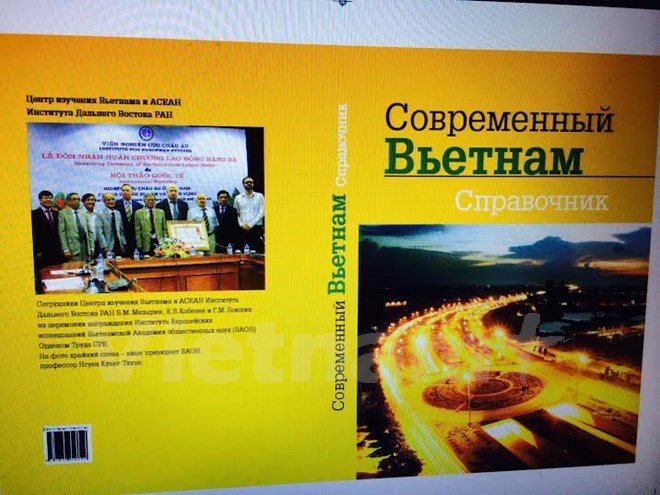
A book on contemporary Vietnam compiled by a research centre for Vietnamand ASEAN under the Russian Academy of Science (RUS) is set to bereleased shortly.


Russian experts publish book on modern Vietnam


The book, titled “Vietnam Today”, compiles the latest documents andresearch studies on political and socio-economic affairs unfolding inthe Southeast Asian nation within the 21 st century. It also offers aglimpse into its history and contemporary turning points.


Insight into modern Vietnam opens with an overview of the political andsocial system that underscores the role of the ruling Communist Party.Following chapters provide readers with information on local marketeconomy building, major sectors, foreign trade and financial system,among others.


Bilateral foreign diplomacy as well as culture and art are also highlights of the book.


VNA


Russian experts publish book on modern Vietnam

#vietnamtravelnews #vntravelnews #vietnamnews #traveltovietnam #vietnamtravel #vietnamtour
Vietnam Travel News - Explore what"s happening around Vietnam.
www.vntravelnews.com
www.facebook.com/vntravelnews
www.twitter.com/vnntravelnews
www.pinterest.com/vntravelnews/
https://plus.google.com/+Vntravelnewscentre/